
Where Ingenuity Meets Impact
Catalyst for Health, a CQC Forum brings together leaders, innovators and implementers from across California’s health care ecosystem to share strategies, build relationships and tackle the state’s most pressing challenges annually. The 2026 Forum will center on the theme Where Ingenuity Meets Impact, exploring how stakeholders can achieve greater impact with limited resources through innovation, collaboration and practical solutions.
The Forum is being hosted at the Kimpton Sawyer Hotel in Sacramento, kicking off with a Welcome Reception sponsored by Bayer Pharmaceuticals on Wednesday, offering health care leaders an intimate opportunity to connect and build relationships ahead of the full-day convening.
- Welcome Reception: April 22, 6:00 – 9:00 p.m.
- The welcome reception is intentionally limited and has reached capacity.
- Forum: April 23, 8:30 am – 4:30 p.m.
- Registration Closed
Keynote Speaker
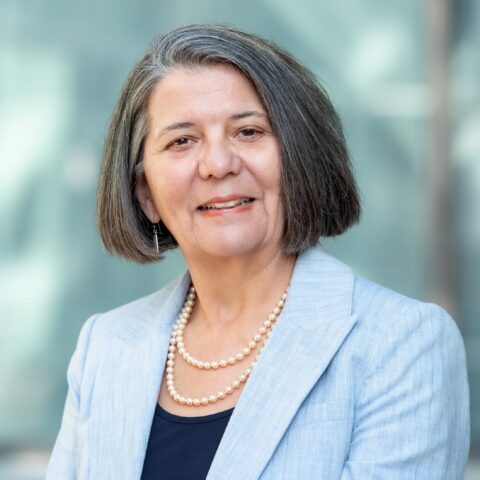
Sandra R. Hernández, MD
Sandra R. Hernández, MD, is president and CEO of the California Health Care Foundation. Prior to joining CHCF, Sandra was CEO of The San Francisco Foundation. She previously served as director of public health for the City and County of San Francisco. In February 2023, Sandra was appointed by Governor Gavin Newsom to serve on the state’s Health Care Affordability Board. From 2018 to 2023, she served on the Covered California board of directors, after having been appointed by Governor Jerry Brown. In 2019, she was also appointed by Governor Newsom to the Healthy California for All Commission. During her time at the San Francisco Foundation, she cochaired San Francisco’s Universal Healthcare Council, which designed Healthy San Francisco. It was the first time a local government in the US attempted to provide health care for all of its constituents. Sandra practiced at San Francisco General Hospital in the HIV/AIDS Clinic from 1984 to 2016 and was an assistant clinical professor at the UCSF School of Medicine. In 2024, UCSF awarded Sandra its highest honor, the UCSF Medal. Sandra is a graduate of Yale University, the Tufts School of Medicine, and the certificate program for senior executives in state and local government at Harvard University’s John F. Kennedy School of Government.
Featured Sessions
View the full Forum Agenda here.
Session 1A (10:15-11:05 a.m.)
Leading California purchasers, encompassing both public (Covered CA, CalPERS) and private employer coalitions (PBGH), have proactively taken on the mantle of driving accountability for both equitable outcomes and sustainable costs. The session highlights how these powerful organizations are tackling this dual challenge using their individual data and leverage. PBGH sets the fiscal context by sharing high-impact, proprietary cost transparency data from the Health Care Data Demonstration Project, exposing the unjustifiable variation in Total Cost of Care (TCOC) across the California market. Covered CA and CalPERS will demonstrate how they are pivoting from simply measuring disparities to using their financial leverage to ensure that interventions both close equity gaps and lower the cost curve. Learn how these influential purchasers are turning their unique data insights into tangible mechanisms to strengthen accountability for health plans and provider systems across the state.
Speakers
- Adrian Naidu (Health Equity Officer – CalPERS)
- Brenna Lin (Applied Research Scientist – NCQA)
- Chelsea Hart-Connor (Health Informatics Lead – Covered California)
- Raymond Tsai (Vice President, Advanced Primary Care – Purchaser Business Group on Health)
Moderator
- Dolores Yanagihara (General Manager, AMP – Integrated Healthcare Association)
Session 1B (10:15-11:05 a.m.)
A recent statewide assessment by CHCF and Aurrera Health uncovered critical gaps and opportunities to transform substance use treatment in California. This session turns those insights into practical, cross-setting solutions—showing how to update clinic policies, redesign workflows for low-barrier MAT, strengthen care-team collaboration, and reduce disparities across primary care, behavioral health, community clinics, and county systems. Drawing on implementation lessons from Alameda County, presenters will demonstrate how patient-centered policy change and workflow re-engineering drive measurable improvements in engagement, retention, and safety. Attendees will leave with ready-to-use templates, tools, and a clear roadmap to lead evidence-based, compassionate MAT integration in their own systems.
Speakers
- Allison Homewood (Managing Principal – Aurrera Health Group)
- Joshua Kayman (Medical Director, Substance Use Continuum of Care – Alameda County Behavioral Health Department)
- Kate Roberts (Deputy Director – Aurrera Health Group)
Moderator
- Sean Atha (Senior Vice President – Vivant Health)
Session 2A (11:20-12:20 p.m.)
The postpartum year is a critical, yet neglected, period leading to the “postpartum cliff”—a systemic drop-off in care access and coordination that contributes significantly to maternal mortality, especially among Black women. This session directly confronts this systemic failure by showcasing actionable solutions to build a sustained “Postpartum Bridge”, anchored in the California Department of Health Care Services (DHCS)’s current statewide efforts to advance postpartum health equity. The California Quality Collaborative (CQC) is supporting this state work by leading the effort to redefine the standard of care. This high-impact panel will unveil practical, ready-to-use clinical recommendations for standard of care and key implementation priorities developed by CQC’s Clinical Expert Workgroup and Payer Roundtables. Attendees will hear from leading clinical stakeholders who will share their delivery system considerations in developing these new standards of care. Crucially, this is a critical working dialogue. The panel invites the audience to provide direct and actionable advice to refine the plan for moving this work forward statewide—focusing on strategy for dissemination, education, and implementation—and to discuss opportunities for their potential engagement in enacting this plan to strengthen California’s Postpartum Bridge.
Speakers
- Claire Horton (VP, National Medicaid and State Programs – Kaiser Permanente)
- Meghan Hayes (Chair, Internal Medicine – Sutter Medical Group, Sacramento)
- Teresa Ku-Borden (Physician/Residency Program Director – Family Care Specialists-Altais/Adventist Health White Memorial)
Moderator
- Brynn Rubinstein (Principal – Brynn Rubinstein Consulting)
Session 2B (11:20-12:20 p.m.)
This session offers a focused look at the operational realities and complex decisions essential for achieving multi-payer alignment and fundamentally changing primary care payment across California. Health plan leaders will share the strategic choices, coordination efforts, and key lessons learned while adjusting underlying payment infrastructure and moving from competition to collaboration. An IPA/MSO supporting practices will discuss the necessary resources and support structures needed for success at the practice level under this new payment structure. Paving the critical path for scaling this work, the session will explore opportunities to expand the current model and examine how multi-payer alignment can achieve California’s primary care investment goals. This is a direct invitation: Attendees are encouraged to contribute their insights and ideas to inform the next phase of this initiative.
Speakers
- Joe Castiglione (Associate Director, Strategy, Partnerships & Policy – Blue Shield of California)
- Robert Boullon (Chief Executive Officer – Argus Medical Management)
- Todd May (Vice President Medical Director, Commercial – Health Net)
Moderator
- Parag Agnihotri (Chief Medical Officer, Population Health Services – UC San Diego)
Session 3A (1:20-2:10 p.m)
Building on the well-established evidence that greater investment in primary care leads to stronger health outcomes, the Health Plan of San Mateo has launched an ambitious Primary Care Investment Strategy. A key part of this strategy includes their approach to calculating primary care spend as a share of total health expenditures and the actionable insights gained from this approach. Leaders will also share how the plan committed to increasing primary care spending by 30% per capita over three years—and what it takes to turn that commitment into measurable impact. Attendees will gain a clear view of how targeted financial strategy can strengthen primary care and reshape population health.
Speakers
- Luarnie Bermudo (Director of Provider Services – Health Plan of San Mateo)
- Miriam Sheinbein (Medical Director – Health Plan of San Mateo)
Moderator
- Carlina Hansen (Senior Program Officer – California Health Care Foundation)
Session 4 (2:25-3:15 p.m)
This interactive, participant-led session creates space to reflect on the morning’s conversations and go deeper on the issues that matter most to those in the room. Following a brief facilitated reflection and live polling on what resonated—and what remains unresolved—participants will help set the agenda by identifying priority topics to explore further, including new challenges not yet discussed. Attendees will break into small-groups, each focused on a high-interest topic and guided by prompts and flip-chart collaboration, and engage in discussions that draw on lived experience, real-world constraints, and practical insights. This is a working session designed to harness the collective expertise of the Catalyst community—surfacing next-step ideas, unanswered questions, and opportunities for collaboration that can carry forward beyond the Forum.
Session 5 (3:20-4:20 p.m.)
Chronic kidney disease remains widely underdiagnosed in California, leading to overwhelming and avoidable costs, particularly among high-risk patients with diabetes and hypertension. Leaders from the National Kidney Foundation and Bayer Pharmaceuticals will unpack the evidence behind low screening rates, the financial consequences of late-stage diagnosis, and the immense burden of late stage interventions such as dialysis and transplant care. The session will spotlight practical strategies for improving screening, enabling earlier diagnosis, and deploying emerging treatment options that offer a critical return on investment by altering the clinical and cost trajectory of CKD for patients and California health systems.
Speakers
- Bashir Kalayeh (National Director, Health Economics and Outcomes Research – Bayer)
- Elizabeth Montgomery (National Vice President, Clinical Practice Innovation and Population Health – National Kidney Foundation)
- Reggie Barnes (Director of Patient Partnership – Autoimmune Registry Inc.)
Moderator
- Edward Sheen (Chief Quality and Population Health Executive – L.A. Care Health Plan)

Sponsorship Opportunities: Align Your Organization With Health Care Leaders
Catalyst 2026 offers organizations a high-visibility opportunity to align with senior health care leaders advancing delivery system improvement across California. Sponsorship provides meaningful exposure, relationship-building opportunities and recognition throughout the Forum experience.
Post-Catalyst Resources
Catalyst Takeaways
Professional Photos
Thank You Sponsors!
Reception Sponsor

Exhibitor Sponsors

Supporter Sponsors

Contributor Sponsors