Making Behavioral Health Integration the Standard of Care in California
AUTHORS
 Kristina Mody
Director, Practice Transformation
Director, Practice Transformation
TOPLINES
Key takeaways from CQC’s inaugural Healthcare Leadership Summit, The State of Integration
What does it take to re-imagine the standard of care for an entire state?
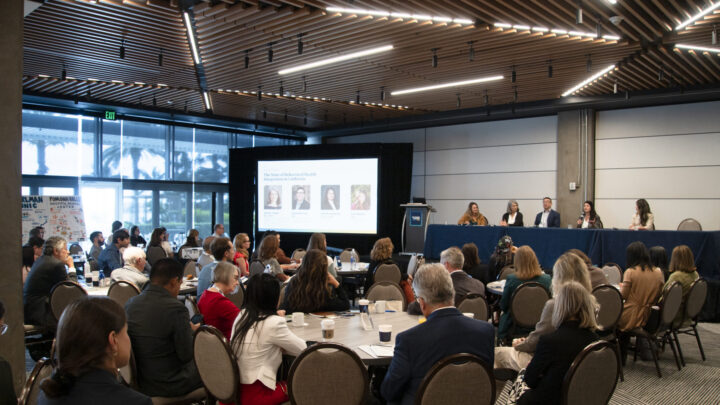
At the California Quality Collaborative’s (CQC) inaugural Healthcare Leadership Summit, focused on The State of Integration, more than 100 healthcare leaders from across California came together to consider that question. Providers, health plans, purchasers and policy leaders gathered in San Diego to reflect on lessons from CQC’s Behavioral Health Integration Initiative and, more importantly, identify what it will take to make integrated behavioral health care the norm across California.
The Healthcare Leadership Summit is CQC’s annual, high-impact convening designed to bring leaders from health plans, provider organizations and state government together around a pressing challenge facing California’s healthcare system.
Across the day’s conversations, several themes emerged that can help guide California’s next phase of behavioral health integration.
Fortifying Care Teams
Three of every four primary care visits already include a behavioral health component. At the same time, new quality measures such as depression screening and follow-up are increasing expectations for primary care teams to screen for depression and anxiety, manage mild-to-moderate conditions, coordinate referrals, address social needs, support families and caregivers, and respond when specialty care is not available.
If we don’t provide primary care teams with the infrastructure and workforce needed to integrate behavioral health into primary care, we will not achieve the population health, quality, cost, equity, provider burnout and access goals California is working toward.
Integration is Advanced Primary Care
The day began with a point of broad consensus: behavioral health integration is no longer an innovation. It is an expectation for advanced primary care.
As one provider shared, “We are in a place in California where we know behavioral health integration works. We don’t need proof of concept. And, we’re now scaling it.”
That shift matters. The question is increasingly not whether behavioral health belongs in primary care, but how California can build the financing, workforce, data and operational infrastructure needed to make integration sustainable at scale.
What it Takes to Scale
The work is not over. There are still workforce challenges to solve creatively, financing workflows to simplify and measurement approaches to adapt.
Through CQC’s partnerships across California and nationally, we have developed a rich collection of resources that can help providers, health plans and other stakeholders take the next steps toward spreading integrated care.
But resources alone will not create system change. Progress also requires alignment, shared problem-solving and opportunities for leaders across sectors to learn from one another and act around common priorities. There are many ways to ignite this, including collective action and convening.
From Summit to Action
CQC’s first Healthcare Leadership Summit provided a spark for that collective action, bringing invested stakeholders together to share what is working, tackle persisent challenges and identify opportunities to move forward around a common vision.
The engagement throughout the day made clear that California has the leaders, bright spots and collective energy to continue to work. As one panelist out it, “behavioral health should not be a luxury; it should be available to everyone.”
The Summit was not intended to end the conversation. It was an opportunity to sharpen the questions, cross-pollinate learnings of what is already working and strengthen the connections needed to move from individual bright spots toward a more integrated system of care.
To continue exploring the themes and outcomes highlighted at the Summit, view CQC’s 2025 Behavioral Health Integration Initiative Annual Report.
The Healthcare Leadership Summit will return in 2027 with a new issue at the center of the conversation. Join CQC’s mailing list to be the first to hear about next year’s summit, other opportunities to engage and ways to keep this work moving forward.